Tiếng Việt

“Eco-Industrial Park (EIP) – A foundation for attracting investment and integrating into global supply chains”

On March 27, QTSC, the Ho Chi Minh City Digital Transformation Support and Consulting Center (DXCenter), in collaboration with the Technology Incubation Center (TIC), under the Agency for Technology Entrepreneurship and Commercialization Development, Ministry of Science and Technology, the Vietnam Industrial Real Estate Association (VIREA), the Open Innovation Hub (SoiHub), and the Open Innovation and Technopreneur Institute (OITI), jointly organized the seminar titled 'Eco-Industrial Park – A foundation for attracting investment and integrating into global supply chains.'
In the context of Vietnam’s commitment to achieving Net Zero emissions by 2050, transforming industrial parks into eco-industrial models is no longer optional but has become essential to maintaining competitiveness and attracting high-quality investment. The seminar aimed to showcase practical models, share transformation experiences, and strengthen linkages among investment, technology, and innovation for industrial parks in Ho Chi Minh City and the Southern Key Economic Region.
According to PwC Vietnam’s 2025 ESG Practice Survey Report, 89% of surveyed companies have either committed or plan to commit to ESG within the next 2–4 years, a significant increase from 80% in 2022. However, about 60% face challenges due to a shortage of skilled personnel and expertise. While 82% of companies have collected ESG data, only 10% are able to leverage, analyze, and apply this data for business decision-making or sustainability reporting.

The program featured in-depth presentations and interactive discussions:
- Session 1: 'Transforming Industrial Parks into Eco-Industrial Parks' – presented by Mr. Nguyen Huu Nghi, Deputy CEO of Amata City Bien Hoa JSC (a model achieving 86% of EIP standards under UNIDO/GEIPP, reducing 1,588 tons of CO₂ annually). Established in 1994 with an area of 513 hectares, Amata Bien Hoa (Dong Nai) is operating stably and is the group’s first project in Vietnam. With advanced infrastructure management and shared social infrastructure systems (such as healthcare, education, culture, and sports), Amata not only provides industrial land but also develops sustainable industrial-urban ecosystems, enabling businesses to access green finance and meet strict international export standards such as CBAM, EVFTA, CPTPP… Amata Bien Hoa is also a pioneer in Vietnam participating in the Global Eco-Industrial Parks Programme (GEIPP), funded by the Swiss Government, focusing on circular economy promotion and climate impact reduction.
- Session 2: 'Building sustainable digital infrastructure for Eco-Industrial Parks' – presented by Mr. Tran Nam Hung, Head of SOC platform management, Digitech Center, QTSC. The presentation highlighted QTSC’s strength in not providing fragmented technology services but integrating multiple capabilities into a unified digital platform tailored to each organization’s needs. QTSC currently possesses core competencies including IT infrastructure and data centers, telecommunications and connectivity, cybersecurity, and advanced technologies such as AI, IoT, Big Data, ML... These advantages enable QTSC not only to deliver technical infrastructure but also to support clients in system operation, monitoring, integration, and scalability.
- Session 3: 'Promoting collaboration and investment in technology and innovation for Eco-Industrial Parks' – presented by Mr. Bui Trung Hieu, Management Board of the Open Innovation Hub (SoiHub). He shared approaches to fostering collaboration and technology investment in eco-industrial parks, emphasizing the urgent need for practical implementation mechanisms to standardize business and industrial park challenges into specific projects. This model is currently being piloted within Saigontel’s industrial park ecosystem, integrating transformation consulting, technology testing, and workforce development to improve the production and business environment, thereby attracting high-quality FDI into Vietnam.
The main panel discussion titled “From orientation to implementation: Connecting investment, technology, and innovation for Eco-Industrial Parks” was moderated by Mr. Tran Thien Long, Vice Chairman of VIREA, with the participation of speakers and industry experts.
The event took place as Ho Chi Minh City manages 58 industrial parks and export processing zones, covering a total area of 22,400 hectares. To maintain its competitive edge and attract green FDI—exceeding USD 5 billion in 2025—the city is accelerating the transformation from traditional industrial park models to eco-industrial park (EIP) models.
At the seminar, experts emphasized that transitioning to eco-industrial parks is no longer optional but a mandatory requirement for Vietnamese enterprises to remain in global supply chains. Industrial symbiosis—sharing resources such as energy, water, and waste—can help businesses reduce energy costs by 10–20% and water consumption by 20–30%.
The seminar provided a comprehensive perspective, from eco-industrial production models (Amata Bien Hoa) to green digital technology models (QTSC) and innovation ecosystems (SoiHub), while also creating a practical networking platform connecting industrial park operators, FDI enterprises, technology providers, and innovation organizations.
Translated by: QTSC
Source from: DXCenter
More articles:
Latest news
-
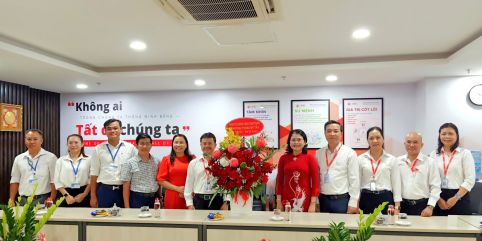
Trung My Tay Ward Leaders visit QTSC to celebrate Vietnamese Entrepreneurs' Day
-
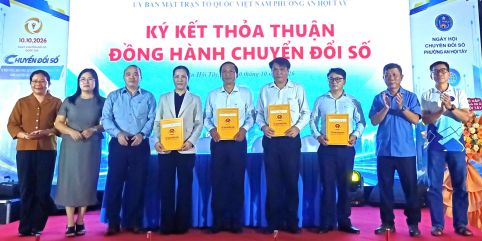
QTSC partnered with An Hoi Tay Ward to promote digital transformation
-
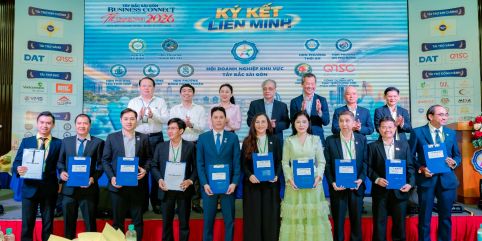
QTSC signed cooperation agreement with Northwest Saigon business community
-
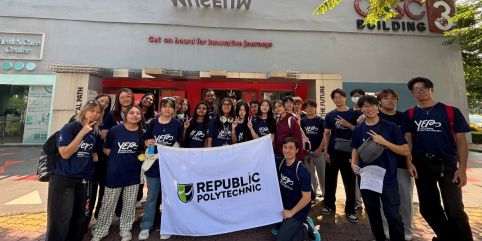
Republic Polytechnic (Singapore) students learned about QTSC’s digital technology ecosystem